
ABOUT ME
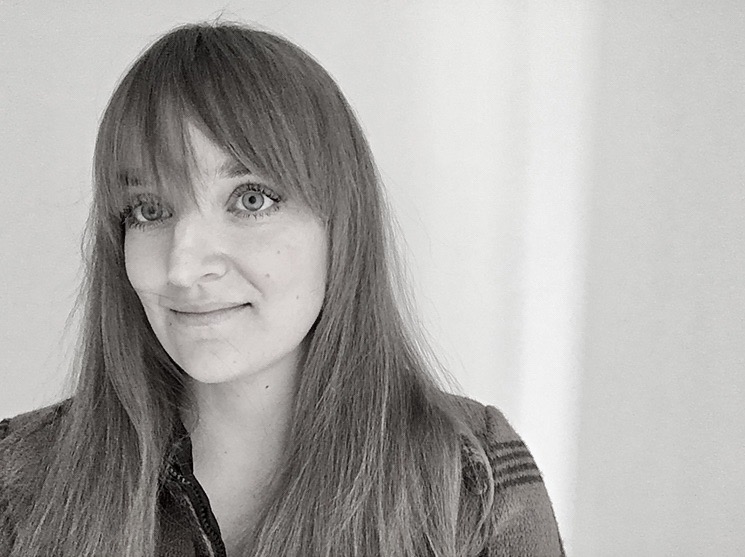
My passion for painting has been continuous for as long as I can remember. Surrounded by museums and magnificent architecture in my hometown of Kraków, I grew up among the fine arts. I studied at the Faculty of Conservation and Restoration of Works of Art at the Academy of Fine Arts in Kraków, and continued my studies at the Faculty of Restoration, Technology of Art, and Conservation Sciences at the Technical University of Munich (TUM), completing my master’s degree in the ancient city of Pompeii in Italy (my thesis project was carried out in collaboration with TUM, the Fraunhofer Institute, Université Lille 3 Charles-de-Gaulle, La Soprintendenza Archeologia, Belle Arti e Paesaggio per Napoli, the University of Naples Federico II, and the Department of Conservation and Restoration of Cultural Heritage at the University of Suor Orsola Benincasa in Naples).
This tangible journey through the techniques and technologies of artworks, mainly European, opened up for me the opportunity to closely observe how various branches of art were practiced in the past. I have worked on the conservation and restoration of artworks ranging from Ancient Greece (Pergamon) and Rome (wall paintings and architecture of ancient Pompeii, the Roman-Germanic Museum in Cologne with wall paintings, reliefs, and Roman sarcophagi). Further, through the Romanesque period (reliquaries from Cologne, the Chapel of the Passion in Kalisz founded by Duchess Jolenta and Duke Henry the Pious), the Renaissance (Filippo Lippi from the Munich Pinakothek), a Baroque silk flag dating from the time of the Peace of Westphalia, late Baroque altarpieces in Kraków churches, German 18th-century landscapes, tempera miniature paintings from the Classical period, wall paintings and their transfers by Wilhelm von Kaulbach from 19th-century Munich, and many other monuments of European art.
Italian art has had and continues to have the greatest influence on me, and therefore, when I consciously decided to begin my professional path as a painter, I naturally turned to the tradition of the Italian Trecento, Quattrocento, and Cinquecento, but also to antiquity, because even the great masters drew inspiration from it. In my opera artis, I use painting techniques employed, among others, by the great Antonello da Messina, Raphael (Raffaello Sanzio), and Leonardo da Vinci. Panel painting experienced its greatest flourishing in Europe during the Trecento, Quattrocento, and Cinquecento periods.
The subject matter of my paintings includes portraiture, elements of fauna and flora, Italian landscapes, and still life. From the contemporary and historical world surrounding me, with its coexistence of chaos and harmony, I select ideas that fascinate and intrigue me the most. Leonardo da Vinci wrote in his Treatise on Painting: “A good painter must paint two things: the human being and the essence of their soul.”
The gilding you can observe on my panels is executed using the Florentine oil mordant technique. The 24-karat gold leaf decorating my panels comes from the Florentine goldbeaters Giusto Manetti Battiloro. Gold-leaf gilded altarpieces of the Florentine Trecento masters such as Gaddi, Giotto, and Daddi, as well as the Sienese Quattrocento, were created in this way. It is there that I found my inspiration for gilding techniques.
I invite you to join me in contemplation of the fine arts.
Maria Lorek
Master of Fine Arts
Conservator and Restorer of Works of Art
Academy of Fine Arts in Kraków
Technical University of Munich
 M A R I A L O R E K